beauty spot
Whether our humanity and the world are continuous, woven from “flesh and bone,” intertwined or opposed, have been vital questions since the moment what we call the self made us believe in our complete autonomy from nature. They are hard to ignore, especially now, in an age of praising technology and progressive alienation from what our being in the world was once inseparable in thought and action.
Could there be anything taken through a camera lens that would still speak for the intactness of that connection?

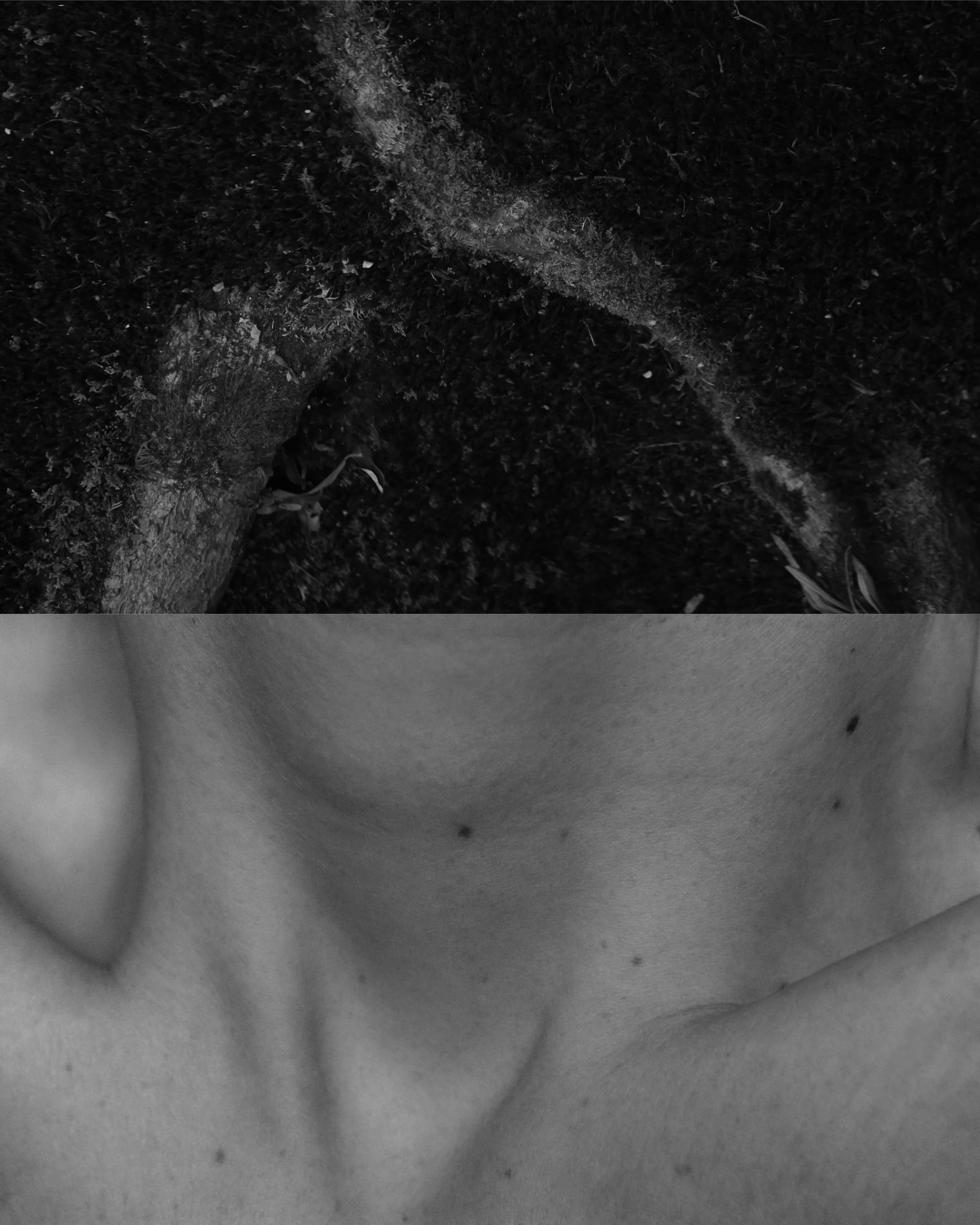
Beauty Spot is a series of photographs that explores the closeness between the human body and the natural world.
Somatic anatomical structure and skin are placed in direct dialogue with the landscape: bodily marks, contours, and textures of the skin are juxtaposed with forms recurring across the natural world. The depicted abdominal curves recall the silhouette of the mountain. The moles echo its shadowed hollows. The expanse of the back, scattered with marks, mirrors a starry sky.
The series is constructed entirely through diptychs: one image of the body followed by one of the landscape. Each pairing is the result of a long process of looking and searching: examining the body in close detail, then moving through the natural world with the same intention, seeking the forms that would answer what the skin already holds.
The title Beauty Spot draws attention to moles, tiny bodily marks. As the eye slides from image to image, the natural and corporeal patterns begin to speak to one another, inviting the eye to behold their kinship.